People sometimes ask whether I actually use the herbs I write about. It's a fair question — the internet is full of wellness advice written by people who have never crushed a fresh leaf between their fingers. So today I want to show you something we've never shared on the blog before: our garden.
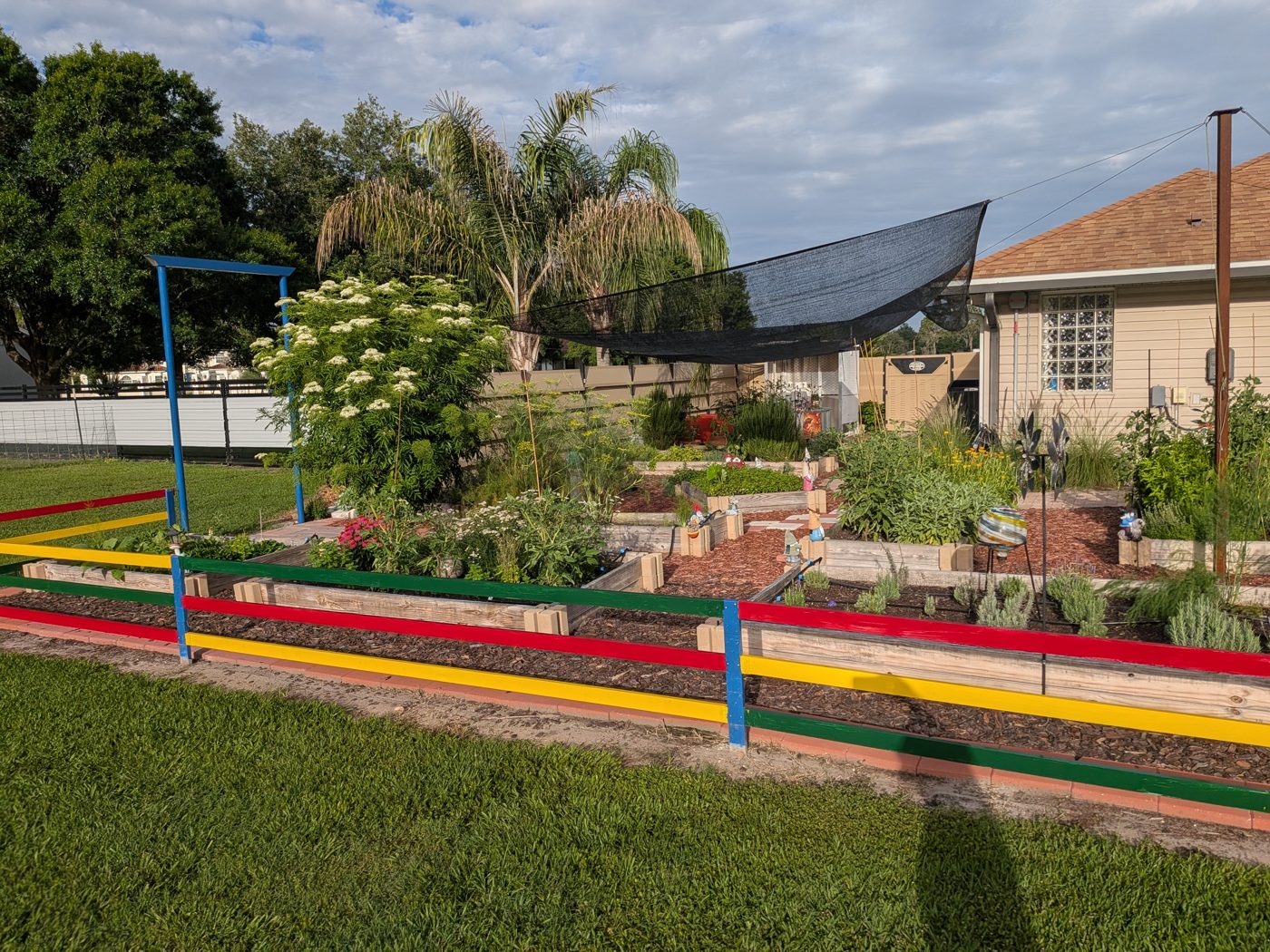
From a Food Garden to an Apothecary
Three years ago, my husband Greg and I moved to Plant City, Florida with one simple dream: grow our own food. We weren't thinking about an apothecary back then. We built raised beds, put up a greenhouse, laid brick paths, and planted whatever we loved to eat.
But here's what happens when a retired nurse starts gardening: every plant becomes a patient history. I'd plant a hibiscus because it was beautiful, then find myself reading the research on what its calyces do for blood pressure. The food garden quietly became a medicine garden, one bed at a time.
What's Growing Right Now
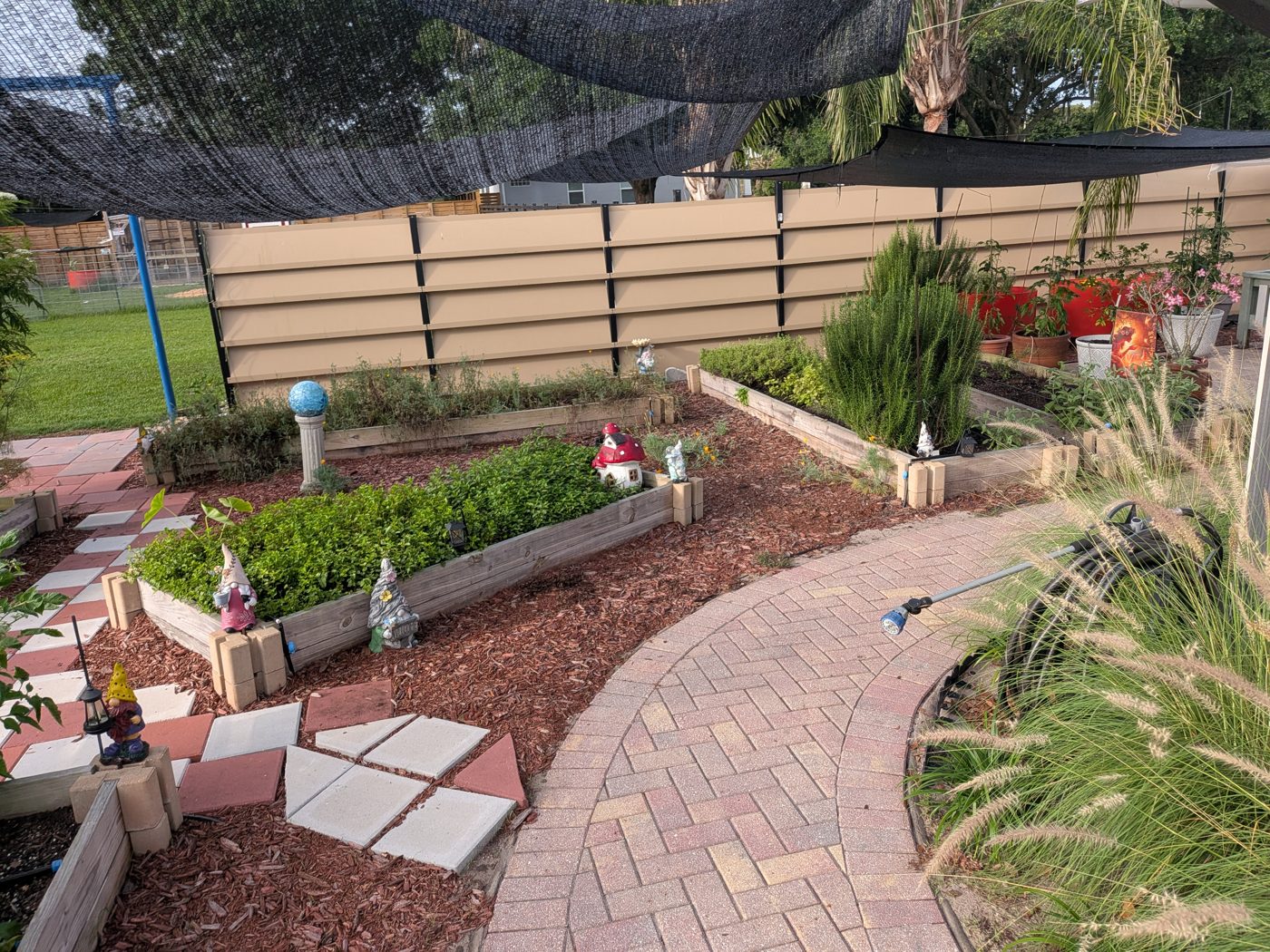
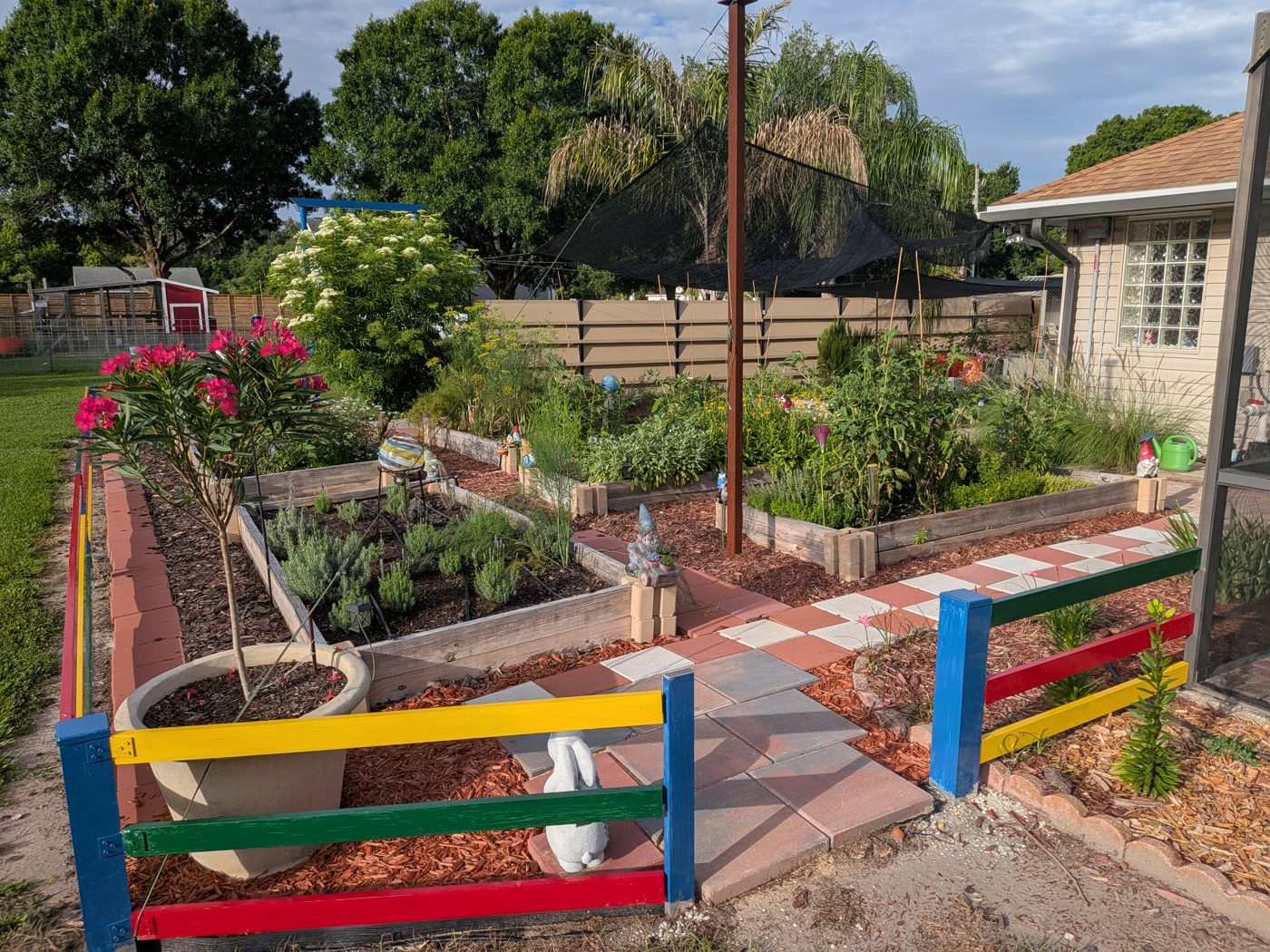
Today we have more than 35 medicinal and culinary herbs growing on the property. And the herbs are just the beginning: two olive trees, three varieties of mango, moringa, lemon, cherry, blueberry, mulberry, pineapple, blackberries, avocado, loquat, passion fruit, ground cherries, pigeon peas, aloe vera — and Kiko's Crump, an edible hibiscus whose leaves you can eat like salad.
The vegetable beds keep us fed, too: tomatoes, cabbage, onions, carrots, butternut squash, bell peppers, jalapeños and hot peppers, cucumbers, and even luffa sponges (yes, sponges grow on vines!).
Why Growing It Matters
You can learn a lot about an herb from a study. You learn different things from growing it — what the healthy plant looks like, how quickly potency fades after harvest, how much the same species can vary from one bed to the next. That experience makes me a better judge of quality when I recommend where to buy herbs you can't grow yourself.
My rule hasn't changed: the garden teaches, but the research decides. Every recommendation on this site is still backed by peer-reviewed studies, and I will always tell you to bring your doctor into the conversation before changing any medication.
The Rest of the Crew
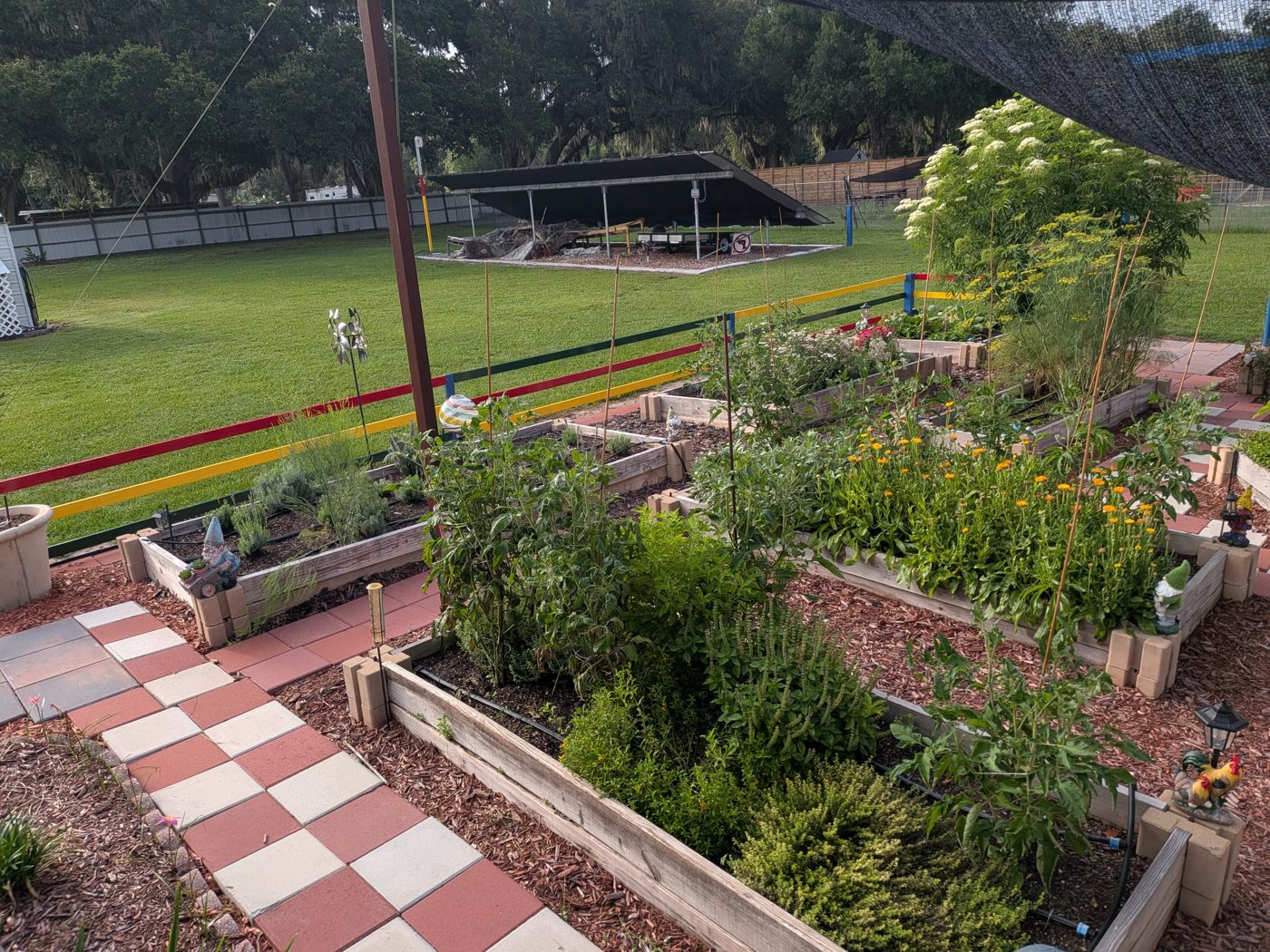
No tour is complete without mentioning the seven hens who supervise all garden operations, or Greg — the builder of every bed and path you see in these photos, and my very first case study. (He tells that story himself on our About page.)
We're three years in, and the truth is we're still beginners at some of this. That's part of why I love it. If there's an herb you'd like to see us grow — or write about — come tell us in our Facebook group. This garden, like the apothecary, grows best with company.
🌿 Look Up Your Medication
Want to explore herbal alternatives for your prescriptions? Use our free lookup tool — search any medication and get evidence-based alternatives with PubMed citations.
Try the Free Lookup Tool